

Golf medical emergencies, prevention and first aid treatment
As a keen amateur golfer myself, I am well aware of the many health and wellbeing benefits resulting from a round of golf. However, it is important to recognise that this is a sport played with metal implements, a hard ball and can involve people riding relatively fast and care-free over rough terrain in golf buggies. It can also be frustrating, which raises stress levels! Consequently, the beautiful game can result in injuries and medical emergencies, some of which can be extremely serious, have long-term consequences and could prove fatal.
The risk of injury among amateur golfers has an incidence between 15.8% to 40.9% annually, but the lifetime incidence of injury in amateurs is higher – from 25.2% to 67.7%. In professionals, the incidence rates are even worse: 31% to 90% annually and 31% to 88.5% over a lifetime. This means that nearly 7 in 10 amateurs and 9 in 10 professionals will suffer a golf-related injury at least once in a lifetime.
The most frequent cause of injury in amateur and professional golfers is the volume of repetitive practice. Poor swing technique is a frequent and perhaps even leading cause of back and limb injury in amateurs. It is critical to warm up prior to undertaking any sport and professional coaching should improve swing technique.
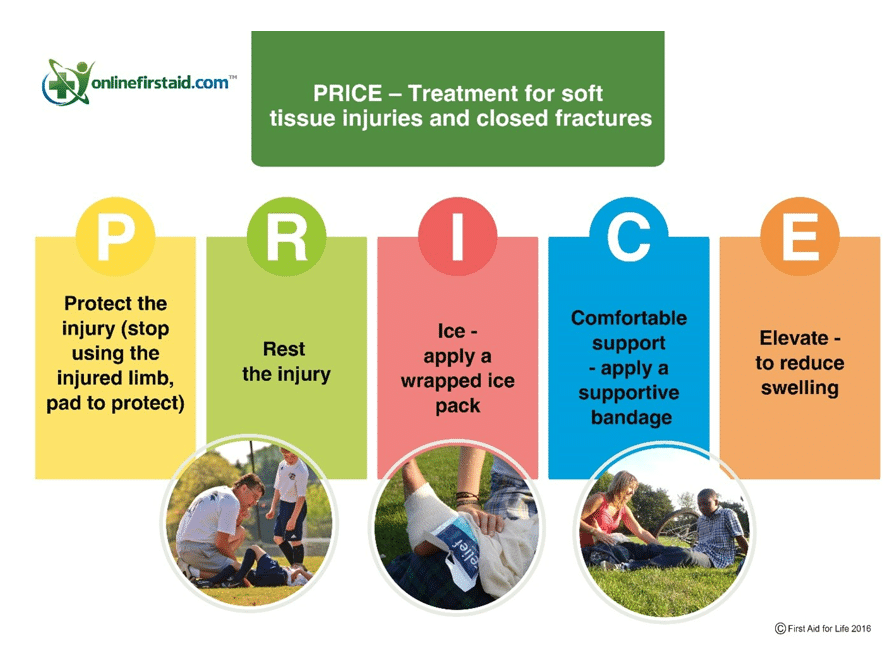
With any soft-tissue injury, after the initial first aid treatment, if things are not improving, we would always recommend you visit a specialist physiotherapist for on-going support and treatment.
Planning ahead:
When setting out on a golf course, always start the day with a fully charged phone and ensure you have network coverage across the course. If not, what specific arrangements have been made in the case of an emergency? Do the golf buggies have an emergency alarm system fitted?
Check and make a note of the emergency numbers and arrangements at the club house.
Ensure you know where first aid kits, trained staff and AEDs are located. As well as how to call for help in an emergency.
What is the first aid protocol in an emergency? Who summons the emergency services and where is their best access point for different parts of the course?
Are there any specific access issues for emergency personnel?
Ensure you have your own appropriately stocked first aid kit.
Ensure you and those you are playing with, have comprehensive golf insurance.
Ask if the person you are playing with has any medical conditions you should be aware of? Ensure you would know how to recognise and help someone experiencing hypoglycaemia, an asthma attack, an anaphylactic reaction or a seizure.
Always ensure you have appropriate clothing for the likely weather conditions, sufficient water, snacks and a hat.
First aid for a medical emergency on the golf course:
Danger:
- Be aware of your surroundings and do not put yourself at risk. What has caused the injury or medical emergency? If it is a ball, the golfer hitting the ball is often unaware of the consequences and may hit a further provisional which could go the same way! If the person has been crushed by a golf buggy, consider how long they’ve been under the vehicle and whether any limbs are trapped. Are you playing somewhere where there could be venomous snakes?
Response
- Check for a response. Are they conscious? If so, ask what happened and obtain consent to help
If there is no response
Open their Airway
Tilt their head and lift their chin and check for obvious obstruction.
Breathing
Check for normal breathing. At least two normal breaths in a 10 second period.
If they are breathing, very carefully put them into the recovery position. When you suspect a head or spinal injury, ideally get other people to help log roll them into the recovery position.
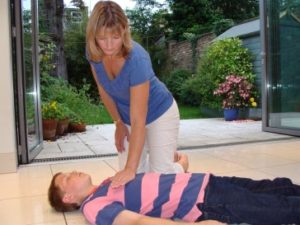
If they are not breathing, start CPR.

First aid for a conscious casualty:
If they are conscious – exclude life-threatening injuries: impacting breathing, bleeding and circulation.
- Circulation: cover any wounds and apply direct firm pressure to stop bleeding. Treat for shock, lie them down and raise their legs.
- Cold weather: ideally have a foil blanket within your first aid kit. Note that hypothermia makes it more difficult for blood to clot. Conserve the casualty’s body heat and insulate them from the cold.
- Heart Attack and Stroke: ensure you can recognise the signs and symptoms of a stroke or heart attack and angina in both men and women, and know how to help them
- Fractures: do not reposition limbs you think could be broken, unless there is immediate concern about the circulation to the lower part of the limb. If you are in a remote area and there may be a delay getting help. If there is a lack of sensation to the casualty’s extremities or change in colour, you may need to reposition the injured limb to a neutral position to restore circulation.
- General care: keep the casualty safe and warm. Shield them from direct sunlight. Do not give them anything to eat. If they are thirsty you can offer small sips of water, to keep them hydrated. Do not move them (unless it is absolutely necessary, with an immediate threat to life).
- Note accident details: take a clear note of the location of the accident, such as the hole on the course or the nearest identifying point, the number of people injured, and the type of injury. If there is a third party involved ask for their insurance details.
Phone for the emergency services
Establish the facts of a serious accident
- Personal information: names and addresses of people involved as well as witnesses.
- Accident Specifics: place, time and circumstances of accident.
- Environmental conditions: terrain, weather, any contributing factors.
- Markings and signs.
Do the relevant parties have any insurance?
Head Injuries and Concussion
Most head injuries on the golf course result from being hit by a golf ball, however people are also injured by clubs, low hanging branches and in buggies.
Signs to look for:
- drowsiness
- confusion
- difficulty standing
- Vomiting

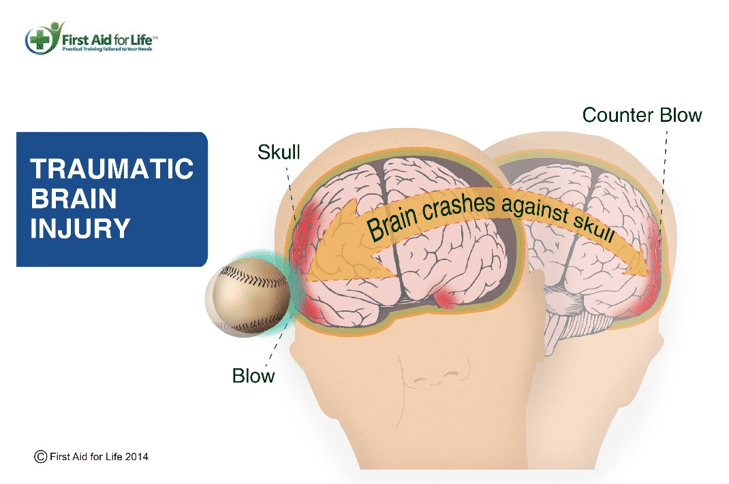
If a person shows any of these signs, seek medical attention as soon as possible. Most head injuries recover with rest. However, concussion indicate a more serious traumatic brain injury and the casualty can deteriorate as the brain swells. Traumatic brain injury can cause swelling within the confined area of the skull can consequently lead to further serious damage to brain tissue.
Insect stings
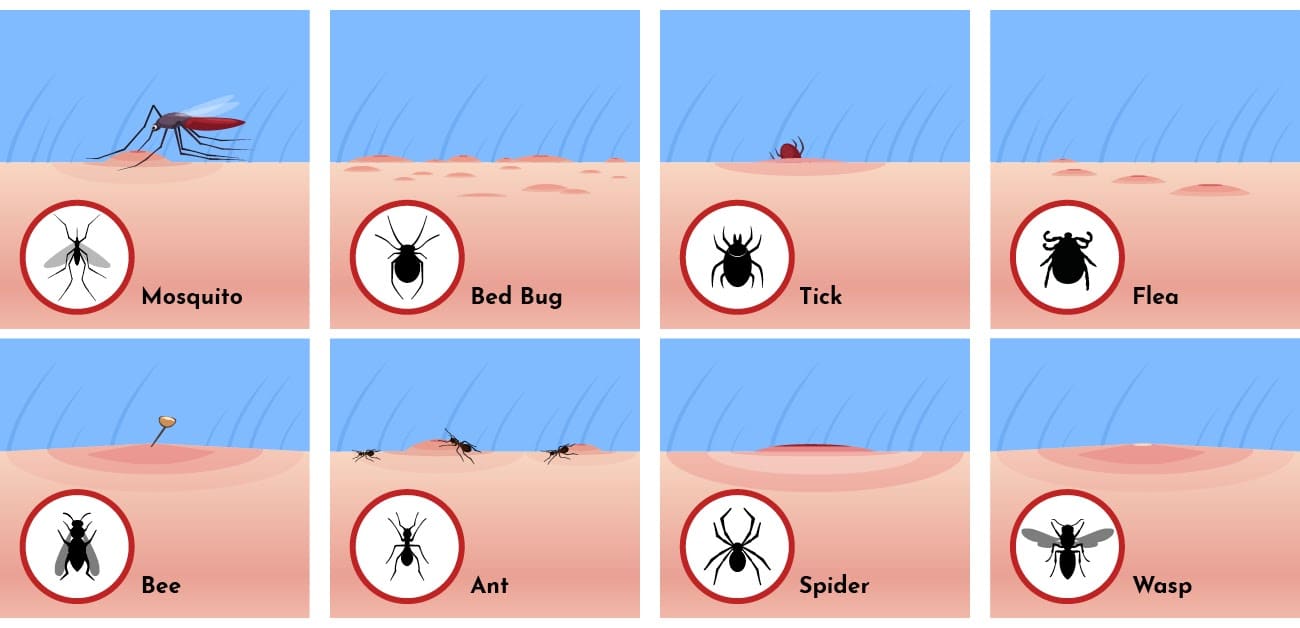
In the UK, people are most commonly bitten by midges, mosquitoes, ticks and fleas. When an insect bites, they release saliva that can cause redness, swelling, blisters and irritation. Most people experience a small red, itchy raised lump, for some the reaction can be more severe. Most insect bites get better within a few hours but advise the person to see their doctor if symptoms persist. If you have antihistamine cream or tablets these can also be helpful. A pharmacist can provide great assistance in the best treatment for insect bites.
Insects inject venom into the skin when they sting. The area usually swells and is sore and painful for a few days. Treat stings in the same way as you would treat an insect bite, with a wrapped ice pack to reduce swelling and prevent further swelling. Antihistamine creams and tablets can also be helpful; consult your pharmacist.
The exception to this is a bee sting. Bees leave their sting behind in the skin and this contains a sac full of venom. Scrape the sting it out immediately with your thumb nail or the score card and then cool the wound down with cold cloths or a wrapped ice pack.
Some people experience a severe allergic reaction (anaphylactic shock) to stings. This is a medical emergency. Ideally they should have an Adrenaline Autoinjector with them, in which case you should administer this immediately and phone for an ambulance.
Tick bites
If someone has been bitten by a tick, you should try to remove it as soon as possible to reduce the risk of getting a tick-borne infection, such as Lyme disease. This is a bacterial infection that can make people extremely ill. It is sensible to visit your doctor for further medical advice if you think you have been bitten by a tick.
Removing a tick
- Using fine-toothed tweezers or a tick remover, gently grip the tick as close to the skin as possible.
- Pull steadily away from the skin without twisting or crushing the tick.
- Wash your skin with water and soap afterwards.

Snake bites and other venomous creatures
Snakes generally tend to bite if threatened, however they may be unhappy if disturbed by someone looking for their ball. The adder is the only poisonous snake in the wild in the UK, however in other parts of the world you may encounter many more snakes and other venomous creatures.
Recognising a snake bite
- Local swelling that is often dark coloured and can become severe.
- You may be able to see two small puncture wounds in the centre of the swelling.
- The bite is likely to be painful and the person bitten could start to show signs of shock and could go into anaphylactic shock.
- They may collapse, have blood clotting problems, tremors, seizures or convulsions
- If they show signs of anaphylaxis treat appropriately
If they stop breathing – start CPR
NEVER use a tourniquet as this will cut off the blood supply to the whole limb and is likely to make things worse.
However, immobilising an affected limb and keeping it below the level of the heart is advised. Keep the casualty as still as possible to avoid increasing their metabolism and further circulating venom. Get emergency help as quickly as possible. If you see the snake, ideally take a photo, or record a description of it as this will help the emergency services identify the best approach for treatment or antidote.
Tip: If you have seen the snake it is really helpful to try and remember its markings and head shape to describe to the medical professionals.
Sunburn
If it’s hot, cool it. Ideally encourage them to have a tepid shower and then cool any burned areas under cool running water for a full 20 minutes. Give them sips of water to drink which will help to prevent heat exhaustion. Seek medical advice if there is extensive blistering or the sunburn is widespread. Always seek medical attention if a baby, child or elderly person has experienced serious sunburn.
Neat aloe vera can be helpful to soothe the burned area and the person can take paracetamol to further reduce pain.
Heat exhaustion
Heat exhaustion is always a risk during indoor or outdoor activities in hot weather or a hot environment. It is typically caused by dehydration and exacerbated by strenuous exercise, inappropriate clothing that limits evaporation of sweat, poor adaptation to heat, too much body fat and/ or lack of fitness.
Signs of heat exhaustion are confusion and hyperventilation (breathing fast).
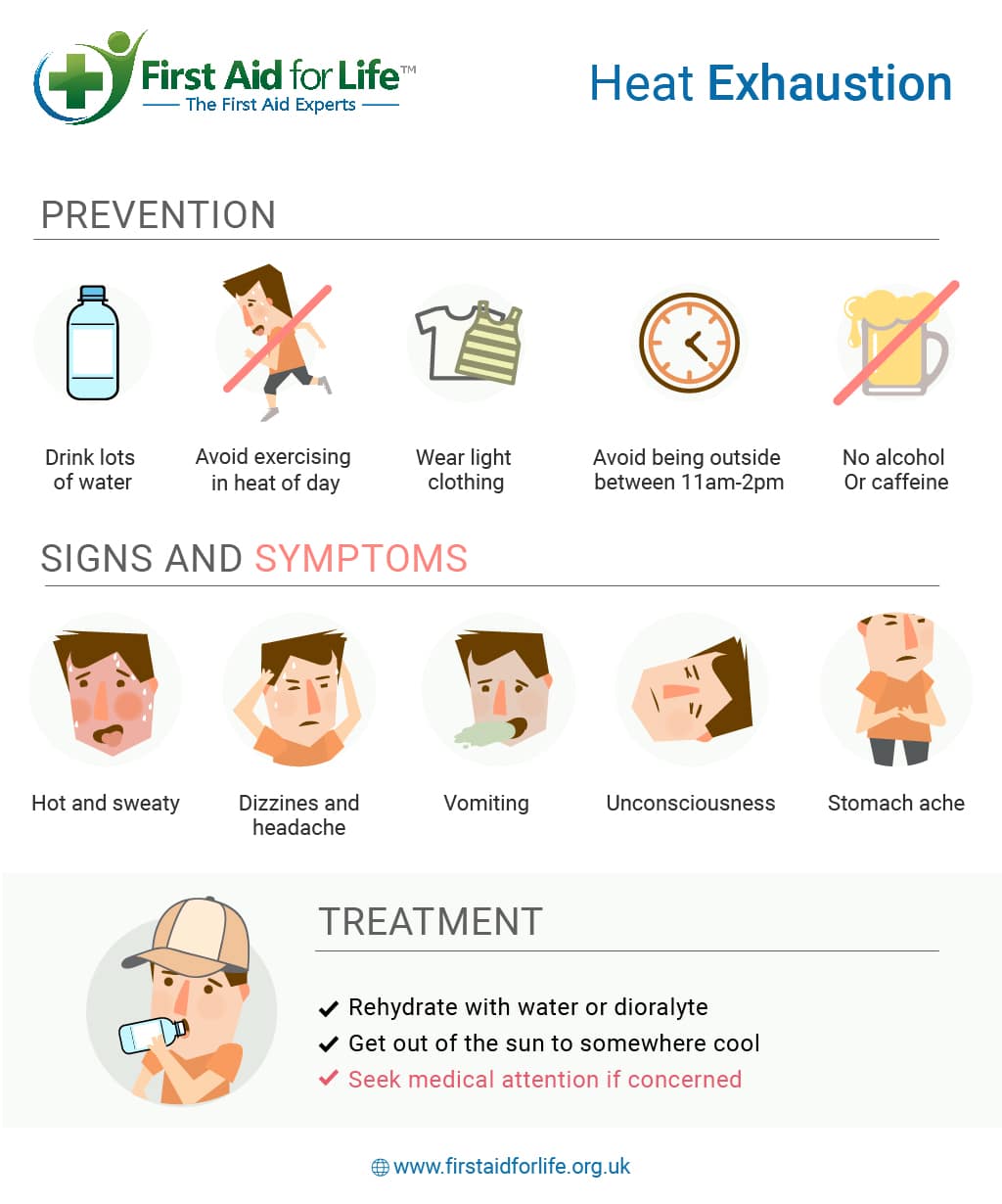
Heat stroke is a serious medical emergency when the body temperature keeps rising but the person is unable to sweat. If this happens, call for an ambulance. Wrap the person in cold wet sheets and they will require admission to the hospital. People often confuse the terms heat exhaustion and heat stroke. Heat exhaustion is common and people usually make a full recovery without further medical treatment, heat stroke is rare and extremely serious.
Crush injury
Dealing with crushing injuries is often complicated and time critical. Often, there is little visible damage on the outside, which belies the fact that the damage that has occurred on the inside. Crush injuries occur when a part of the body, such as a hand, arm, leg, foot or trunk is squashed. In a golf situation, this most often occurs from a golf buggy, either trapping a limb against a tree or should the buggy overturn and squash the person beneath it.
The limb or crushed part may look swollen and is likely to be very painful. The skin may appear stretched and discoloured.
For crushing less than 15 minutes:
- Release the compressive force, or object, as quickly as you can.
- Dial 999.
- Control any bleeding.
- Treat for shock.
Crush injury treatment needs extremely quick action. Set a timer when you first arrive and quickly identify how long the person has been crushed. If you are sure that the crush has occurred less than 15 minutes beforehand and the object crushing them can be easily moved, remove it quickly.
For crushing more than 15 minutes:
- Dial 999 and contact the caddy master, pro shop or emergency response co-ordinator for the course.
- DO NOT release the compressive force or object unless specifically instructed to do so by a medical professional from the emergency services, they will give precise instructions how to do this and may advise using a tourniquet to limit the impact of potential toxins entering the blood stream. They will instruct you how to do this.
- Monitor and reassure the patient.
- Be prepared to treat for shock. Signs of shock are anxiousness, pale, cold clammy, rising pulse and breathing rate. Follow instructions from the emergency services and if guided to do so, lie the casualty down raise their legs if practicable.
- Check for other injuries and deal with them if practicable or note them for Emergency Services.
Soft tissue injuries resulting from golf and tips to treat and reduce their incidence:
Many golf injuries occur because of repetitive movements during golf and are often experienced when someone starts playing golf without properly warming up. Warming up muscle groups helps prevent injuries, as well as activating muscle memory and is likely to lead to better play too.
Although golf is generally viewed as a low impact sport, lack of prior stretching can lead to injury. The five most common injuries are:
- Low Back Pain
- Golfer’s Elbow
- Plantar Fasciitis
- Knee Pain
- Shoulder Pain
How to prevent lower Back Pain when playing golf
The repetitive action of the golf swing is the number one cause of low back pain in golfers. Professional golf coaches should help to adjust the swing to reduce the likelihood of injury. A ‘Reverse Angle’ swing fault is a common cause of back pain that occurs when the spine deviates from the vertical during the swing.
Core back strength and stability exercises, can be effective in the prevention of low back pain. These include exercises such as sit-ups, side bends and ‘the plank’.
How to prevent Golfer’s Elbow
Golfer’s elbow is inflammation of the tendons of the forearm at the point where they insert into the humerus (upper arm) bone. This inflammation can be caused by forceful gripping of the golf club.
Gripping the golf club too hard can trigger the Golfer’s Elbow pain. Regularly stretching the muscles which work over the wrist by doing ‘limp-wrist’ and ‘policeman halting traffic’ type stretches can help to reduce the likelihood of experiencing this injury.
Plantar Fasciitis and how to prevent it
Plantar Fasciitis is a common and extremely painful condition. It is inflammation of the Plantar fascia (a fibrous sheath under the sole of the foot), at its attachment to the heel bone. The incidence of Plantar Fasciitis can be reduced by wearing well-fitting golf shoes with good arch support.
Here are also some helpful exercises that will stretch and strengthen the foot muscles:
- Sit down on a chair and place a towel on the floor. Use your toes to pull the towel towards you. Hold the squeeze for 30 seconds, or less if uncomfortable.
- Continue sitting and grasp your toes, gently pulling them towards you until you feel a slight stretch in the arch of your foot. Hold the stretch for 30 seconds, or less if uncomfortable.
- From a standing position, lean face-forward with both hands against a wall. Stretch your back leg straight and bend your front leg, keeping both heels on the floor. Move your hips slowly forward until you feel a stretch in your calf. Hold the stretch for 30 seconds and do not bounce. Switch legs to complete the exercise.
- Stand on one foot on the bottom step of stairs and gently raise and lower yourself on one foot to feel the stretch down the base of the foot.
- Return to step 1 and repeat.
Knee injury
During a golf swing, the knees are under rotational and movement pressure. Often, the knee pain is not initially caused by golf but may be due to an existing condition that becomes aggravated by the golf swing movement, causing knee swelling and pain.
Exercises to maintain Quadriceps can provide support for the affected joint.
To stretch quadriceps:
- Stand and find a stable surface to lean on
- Bend one knee back by grasping your ankle with one hand
- Bend your knee back as far as is comfortable
- Hold the position for 30 seconds
- Return to standing and repeat for the other leg
- Repeat 3-5 times for each leg.
Shoulder injury
The ‘Rotator Cuff’ muscles can become damaged during the repeated stresses of the golf swing, particularly if there is a swing fault such as ‘Chicken Winging’ (bent elbows at ball contact) or a ‘C-Shaped Posture’ (rounded lower back) that can put too much stress on the shoulders. A golf professional should be able to help correct some of these issues and a specialist physiotherapist will provide tailored exercises to help.
Dislocated Shoulder
A dislocated shoulder may occur when someone outstretches their arms when falling. This puts them at serious risk of injury, as their arm resists the full force of the fall.
Signs to look for: the shoulder swelling, feeling loose and a dull pain. However, most dislocated shoulders can be repositioned by a health professional and supported by a sling. This should relieve pain, however the person will need intensive physiotherapy and additional support before resuming golf.
First Aid Responsibilities of Golf Clubs
Golf clubs have responsibilities for non-golfing visitors as well as players.
Duty of Care: a duty of care means that a sports business needs to take such measures as are reasonable in the circumstances to ensure that individuals will be safe to participate in an activity which is specifically offered. There is no general duty of care towards the public at large. However, if there is a formal relationship, for example between a club and a club member, or a coach and an athlete, then there is a duty of care.
When children and young people are involved in organised sports activities and are to any extent under the care and/or control of one or more adults, the adult(s) and business have a duty to take reasonable care to ensure their safety and welfare.
Legal Duty of Care: In many sports activities, it is recognised that a sports business or individual (e.g. coach) owes a duty of care to its members. However, it is also understood and recognised that accidents can and do happen, and it is not possible to predict every eventuality. Liability for the legal duty of care would only arise when an incident occurs and it can be demonstrated that the risk was unforeseeable and it was not a risk that should have been highlighted, addressed and mitigated in the risk assessment.
Where there is public access to the club grounds through public footpaths etc, there is also a duty of care to those using these paths.
As with any business: all golf clubs should have clearly labelled first aid kits with appropriate contents for those using their golfing facilities. Their staff should be appropriately trained and ideally, they should have on-site defibrillators accessible within 3 minutes from any part of the course.
About us
First Aid for Life and Onlinefirstaid.com have specific sports related first aid courses and will always tailor courses to the needs of those attending. We understand the very specific challenges of administering first aid on a golf course and can help you with your first aid planning and communication. We have helpful free first aid posters that can be personalised to include specific protocol and contact information.
It is strongly advised that you complete an online or attend a practical or online first aid course to understand what to do in a medical emergency. Click here or call 0208 675 4036 for more information about our courses. First Aid for Life provides this information for guidance and it is not in any way a substitute for medical advice. First Aid for Life is not responsible or liable for any diagnosis made or actions taken based on this information.



0 Comments