

Anaphylaxis and adrenaline auto-injectors – a guide
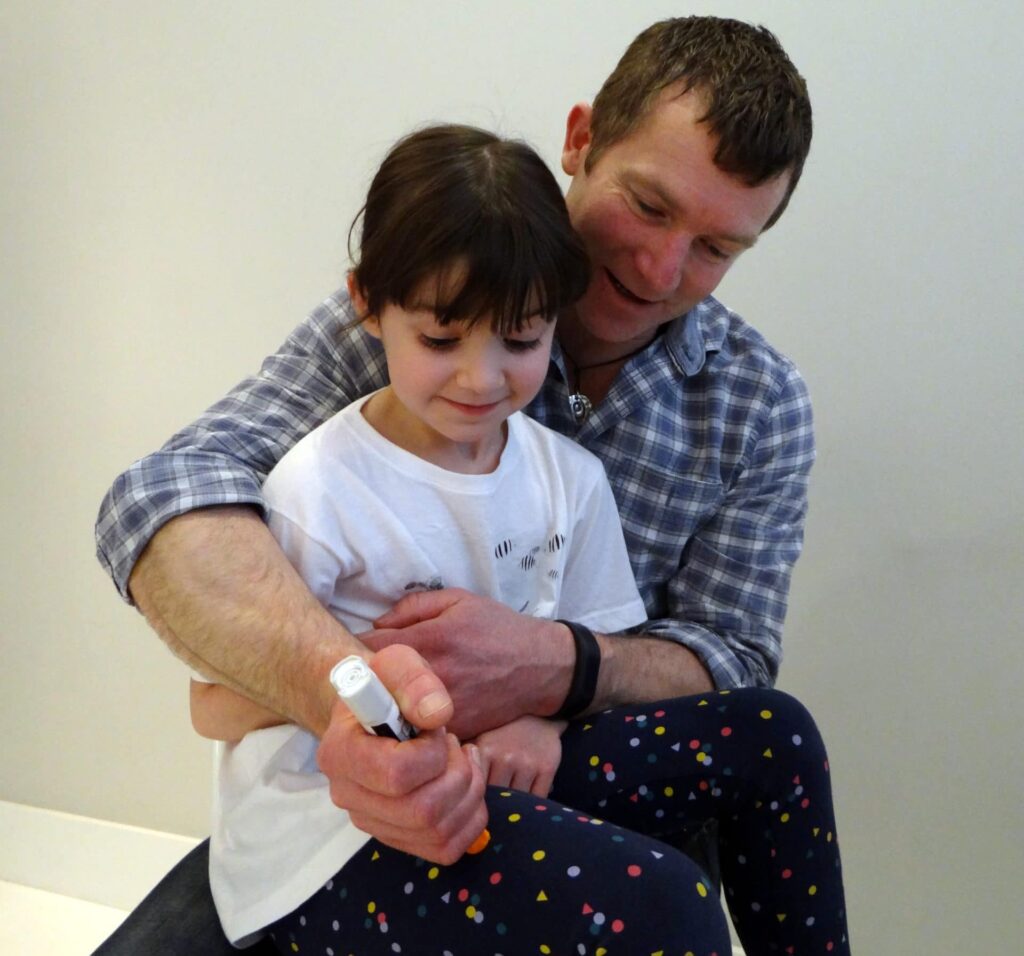
Anaphylaxis, adrenaline auto-injectors and nasal sprays a comprehensive guide
Anaphylaxis is an extremely severe allergic reaction. Reactions usually begin within minutes and progress rapidly, however, they can occur up to 2-3 hours after exposure. Exercise can also initiate symptoms a while after exposure to an allergen. Common allergens include food and insect stings.
In the UK, 5–8% of children have a food allergy. Anaphylaxis can proceed rapidly and failure to administer adrenaline promptly has been associated with fatalities.
Doctors often prescribe adrenaline auto-injectors (AAI) to children at risk of anaphylaxis. These devices should be swiftly accessible to them at all times. AAIs deliver a potentially life-saving dose of adrenaline in the event of a severe allergic reaction (anaphylaxis).
Why does anaphylaxis occur?
The body’s immune system reacts to a substance it wrongly perceives as a threat. It produces an “allergy” antibody called Immunoglobulin E (IgE), which sticks to the substance (“allergen”) and causes the release of chemicals including histamine. Histamine dilates capillaries in the skin, resulting in an itchy rash, swelling and flushing of the skin. A drop in blood pressure leaves the casualty dizzy, light headed and in danger of collapse.

How to treat someone experiencing an anaphylactic reaction
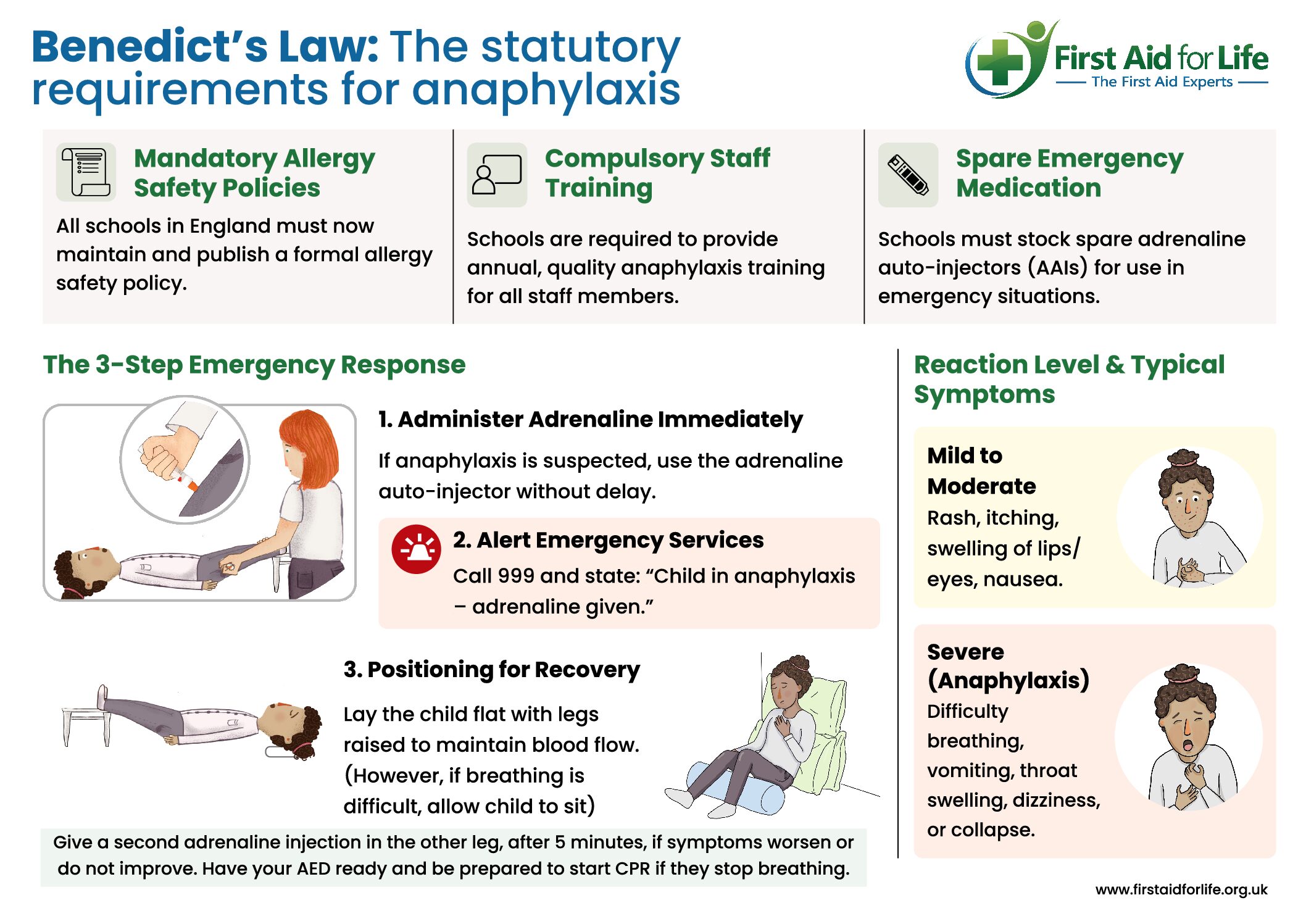
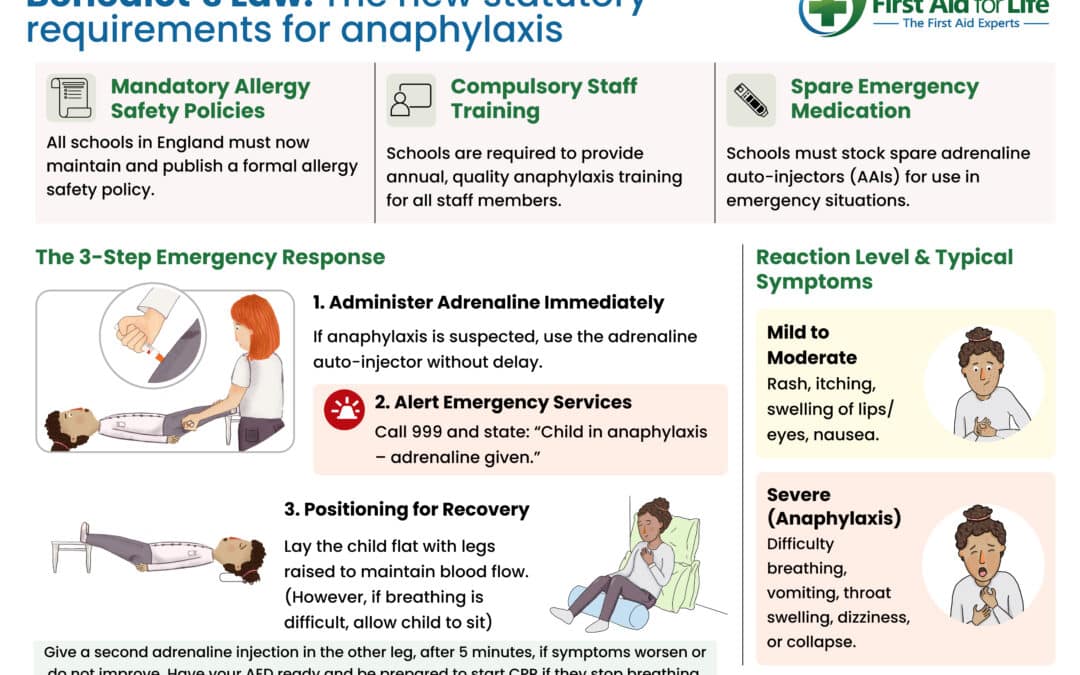
If you would like a free copy of this poster – or any others in this article, email emma@firstaidforlife.org.uk
In extreme cases, the allergic reaction can progress within minutes into a life-threatening reaction. The treatment of anaphylaxis is to give adrenaline, (usually using an autoinjector) by injection into the outer muscle of the mid-thigh.
How many doses of adrenaline should be given?
Administration of adrenaline can be lifesaving, but you may need more than one dose. Some anaphylaxis reactions require more than a single dose of adrenaline. It is therefore vital to always dial 999 and request an ambulance whenever anaphylaxis has occurred. Call 999 even if there has been a good response to the adrenaline injection.
There have occasionally been reported manufacturing faults which have resulted in the adrenaline autoinjector device failing to deliver the necessary dose. There are also issues with human mistakes. It is therefore recommended that anyone prescribed an adrenaline autoinjector, has immediate access to two at all times.
Give a second adrenaline autoinjector if symptoms become worse or haven’t improved within 5 minutes. This second injection should ideally be given in the other leg. This is because adrenaline constricts blood vessels and so the circulation in the initial leg, may have been reduced.
Adrenaline can be safely given by non-healthcare workers as an injection into the muscle using an adrenaline auto-injector (AAI). Current brands available in the UK are EpiPen®, Emerade®, Jext®. School staff should ideally have received appropriate training to be confident administering the medication.
Always give adrenaline FIRST in someone with known food allergy who has sudden-onset breathing difficulties. (Before other medicines such as asthma inhalers and even if there are no skin symptoms.) Delays in giving adrenaline are a common finding in fatal reactions. – advice from www.sparepensinschools.co.uk
IF IN DOUBT, give adrenaline. It is much better to give it early, or unnecessarily than too late!

If you have the latest version of the Epipen, you no longer need to hold for 10 seconds – just 2 will suffice. However, holding for longer will do no harm and there is such a problem with supply that people are unsure which version they have!
If you would like a copy of the above poster, please email me emma@firstaidforlife.org.uk and I would be delighted to send you one
Different makes of adrenaline auto-injectors

- Epipen: 150 and 300 microgram doses available. Epipen Junior delivers a 150 microgram dose
- Jext: 150 and 300 microgram doses available
Discontinuation of Emerade
Since the 9th of May 2023 emerade has been discontinued and can no longer be bought or sold.
New nasal spray alternative
As of the 18th of July 2025, the nasal spray EURneffy has been approved for use in the UK. This is an important new addition to the traditional auto-injectors providing a needleless alternative to the potentially life saving medication.
The 2mg dose, which will be releasing first, is intended for children and adults weighing over 30kg(66lbs). The 1mg dose will be available after for children over 4.
How to use the new nasal spray
Insert the tip of the nasal spray directly into one nostril making sure not to inject it before it’s in. Once inserted, with your thumb on the bottom of the spray, use your index and middle finger to press the spray down. This will release the 2mg dosage all at once.
DO use the nasal spray even when congested.
DO always carry 2 nasal sprays incase one fails or the dose is injected incorrectly. This is in accordance with government guidelines on the use of the nasal spray.
DO NOT press the the spray before inserting it into your nostril. It only contains one dose therefore cannot be reused.
For more information on the effects and usage, please visit the MHRA website.
Nasal Spray availability
The nasal spray EURneffy is yet to be purchasable in the UK. Latest reports suggest that it will be available in late august or september of 2025.
Once available, healthcare professionals will determine whether you are eligible to switch to EURneffy.
It will not replace auto-injectors, instead it will be available aswell as auto-injectors. If you have any queries about the nasal spray, it is encouraged to speak with your GP or healthcare professional.
When fully launched the product will be available in pharmacies and to other healthcare professionals that can prescribe it.
Online First Aid Course
The easiest way to learn these life-saving skills
Anaphylaxis and Acute Allergic Reaction Course ?Learn at your own pace, stop and start as often as you like, and have full access for an entire year.
About us
First Aid for Life cover anaphylaxis and asthma on all our full day courses. Our highly experienced medical, health and emergency services professionals will tailor the training to your needs and those of your staff and pupils.
Written by Emma Hammett for First Aid for Life
Award-winning first aid training tailored to your needs – Please visit our site and learn more about our practical and online courses. It is vital to keep your skills current and refreshed.
We strongly advise that you attend a fully regulated Practical or Online First Aid course to understand what to do in a medical emergency. In addition, please visit https://firstaidforlife.org.uk or call 0208 675 4036 for more information about our courses.
First Aid for Life is a multi-award-winning, fully regulated first aid training provider. Our trainers are highly experienced medical, health and emergency services professionals. They will tailor the training to your needs. Courses for groups or individuals at our venue or yours.
First Aid for life provides this information for guidance and it is not in any way a substitute for medical advice. First Aid for Life is not responsible or liable for any diagnosis made, or actions taken based on this information.

we re an independent school 4- 18 year olds in Bristol with many sites and are finding it impossible to get emergency AAI’s, from suppliers, GPs and Chemists. Have you any advice
Thank you
Thank you for your message and really sorry it is proving so difficult at the moment. The only way is to shop around. You are entitled to buy a ‘reasonable’ number from Chemists and they are supposed to dispense them to you. However, there are currently extreme shortages and they will be prioritising supplies to people with known allergies. There may be a bit of a postcode lottery element too.
Good ingormation
Good
thanks!
A very important and necessary document to add to our learning
many thanks
great learning. Many thanks
Thankyou much appreciated
thankyou for your hard work
Good piece of information and learning material. Many thanks
Many thanks Lee
Good learning
Many thanks
This exercise give me clear pictures of what anaphylaxis is and best ways of handling it and this is very educative.
many thanks
This is very educative and useful at work
many thanks
Very educative thank you.
many thanks
many thanks
thanks
Thanks for the information as regards this field it has widened my knowledge and understanding. It is very educative.
thank you for educateing
Great learning thank you
Thanks for the information
Very useful knowledge. Thank you.
Thankyou. Very useful information.
Thank you useful infomation
Useful resource for self learning
Very useful
very good and useful
Useful and insightful
thanks
Thanks
Really helpful advice. Always appreciate your information emails. Straightforward and relevant advice that I trust
Thanks Katherine, Glad to hear you enjoyed it