

How CPR Works

CPR (Cardiopulmonary Resuscitation) works by acting as an external, manual pump for the heart. When a person’s heart stops beating effectively (cardiac arrest), blood flow to the brain and other vital organs ceases. CPR helps keep oxygenated blood moving until the heart’s natural rhythm can be restored.
When the heart is not beating properly it quickly becomes engorged with blood, which further affects its ability to beat. Quality CPR can help restore the heart to a shockable rhythm. Quality CPR can help to squeeze out the engorged blood and revitalise the heart. This is why sometimes someone appears to be in a non-shockable rhythm when an AED is first applied, but quality CPR can allow the heart to readjust and change to a different rhythm. Once there is a shockable rhythm the AED can be deployed and it may help the heart convert back to a normal sinus rhythm or a rhythm compatible with life.
How the Mechanics Work
Chest Compressions
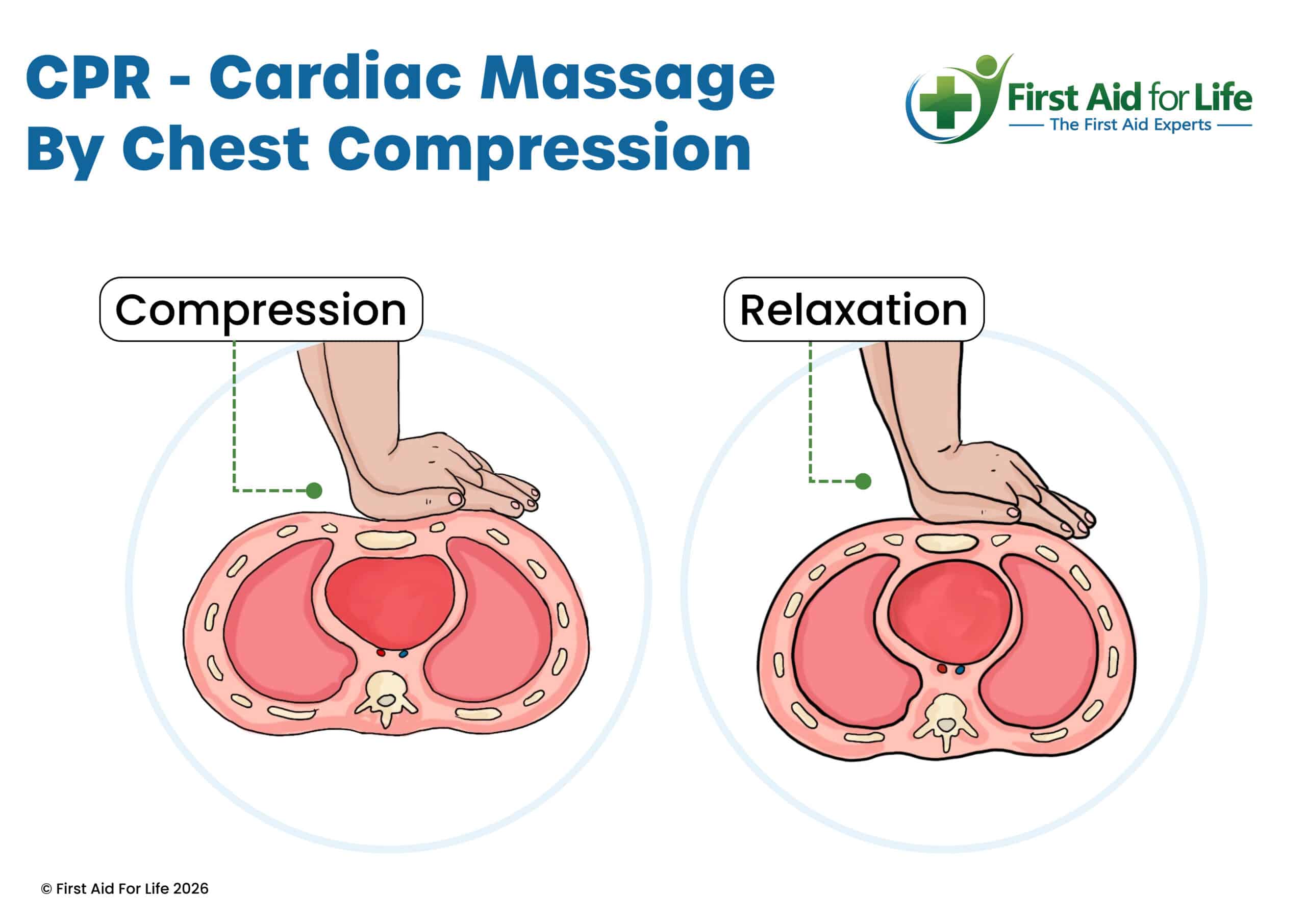
When you push down on the chest, you squeeze the heart between the breastbone and the backbone. This creates positive pressure in the chest cavity (thorax) that forces blood out of the heart and through the arteries to the brain and body. Good compression will increase the circulation and blood pressure.
Chest Recoil
Releasing the pressure (letting the chest come back up) creates negative pressure, which pulls blood back into the heart. Full recoil is essential to allow the heart to refill before the next compression. The heart is the only organ that gets oxygen when it is relaxed (in diastole), all other organs receive their oxygen when the heart is in systole and pumping the blood round.
Oxygen Retention
In the first few minutes of an adult cardiac arrest, there is usually still some oxygen remaining in the blood. Chest compressions circulate this existing oxygen to the brain, which can delay brain damage.
Rescue Breaths
When used, rescue breaths add fresh oxygen into the lungs, which is then circulated by the compressions. These breaths need to be short, minimising interruptions to the compressions to less than 5 seconds. Just sufficient breath to let the chest rise. Breathing in too hard, takes too long and can also breathe air into the stomach which can cause the stomach to leak fluid into the airways, if you breathe in too hard you also interfere with the pressure gradient which also affects the blood circulation during CPR.
Key Requirements for Effectiveness:
- Rate
- Depth
- Minimal Interruptions
Rate
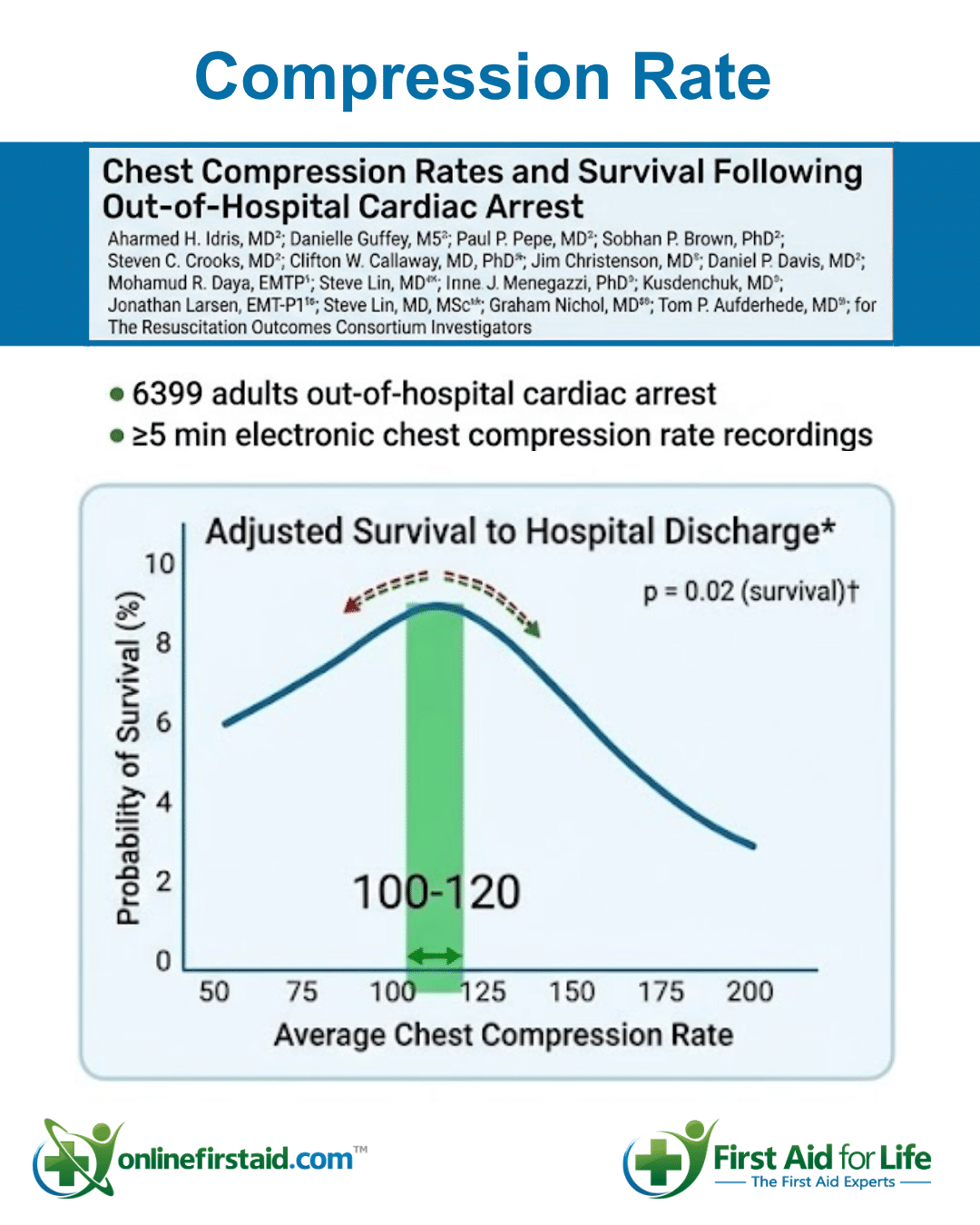
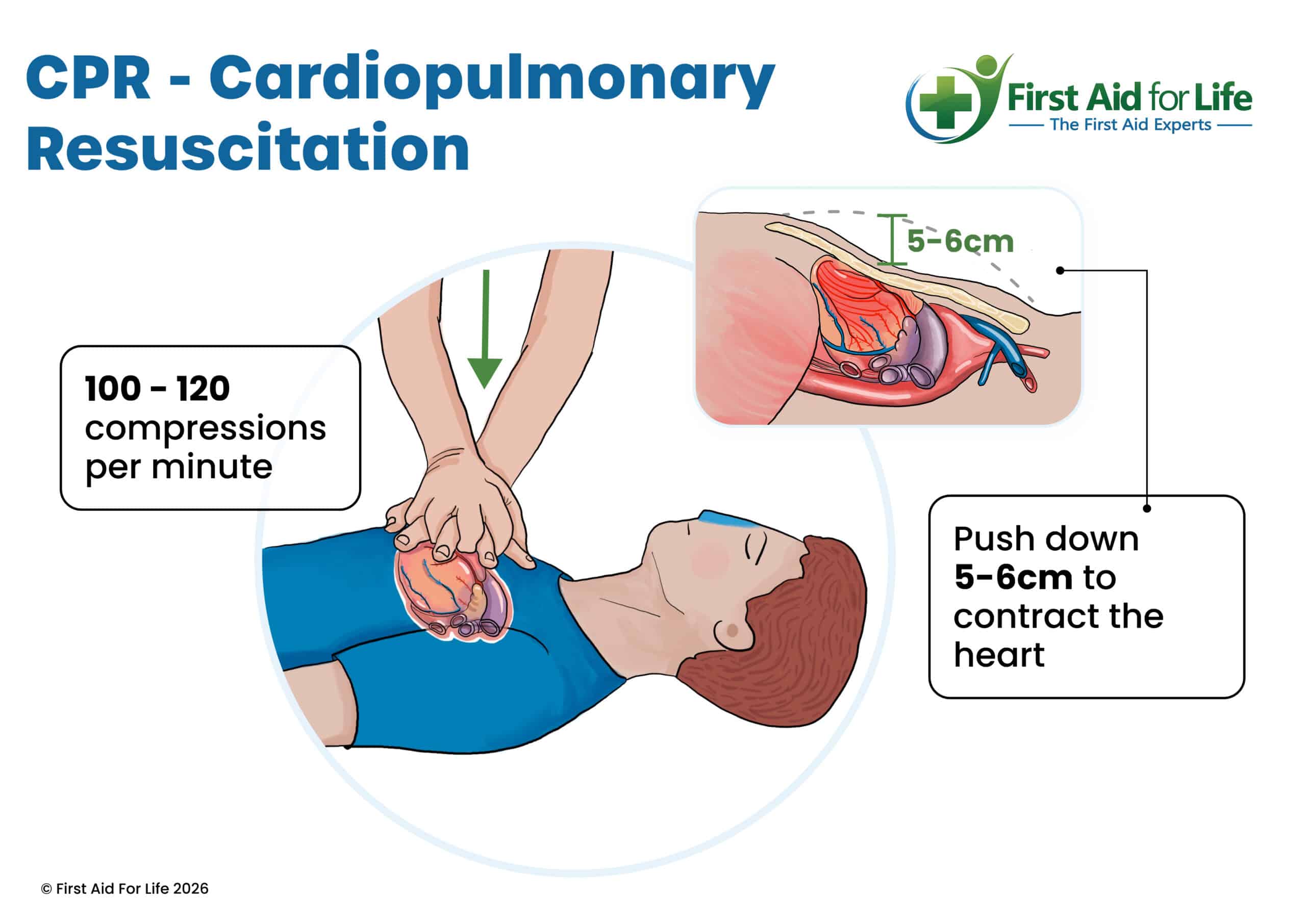
100 to 120 compressions per minute (roughly the beat of “Stayin’ Alive”) to maintain adequate blood pressure. A study by Ahamed Idris of over 6,399 adults in out of hospital cardiac arrest demonstrated that this rate is the optimum speed to save lives. By recording the rate of chest compressions and adjusted survival to hospital discharge.
Depth
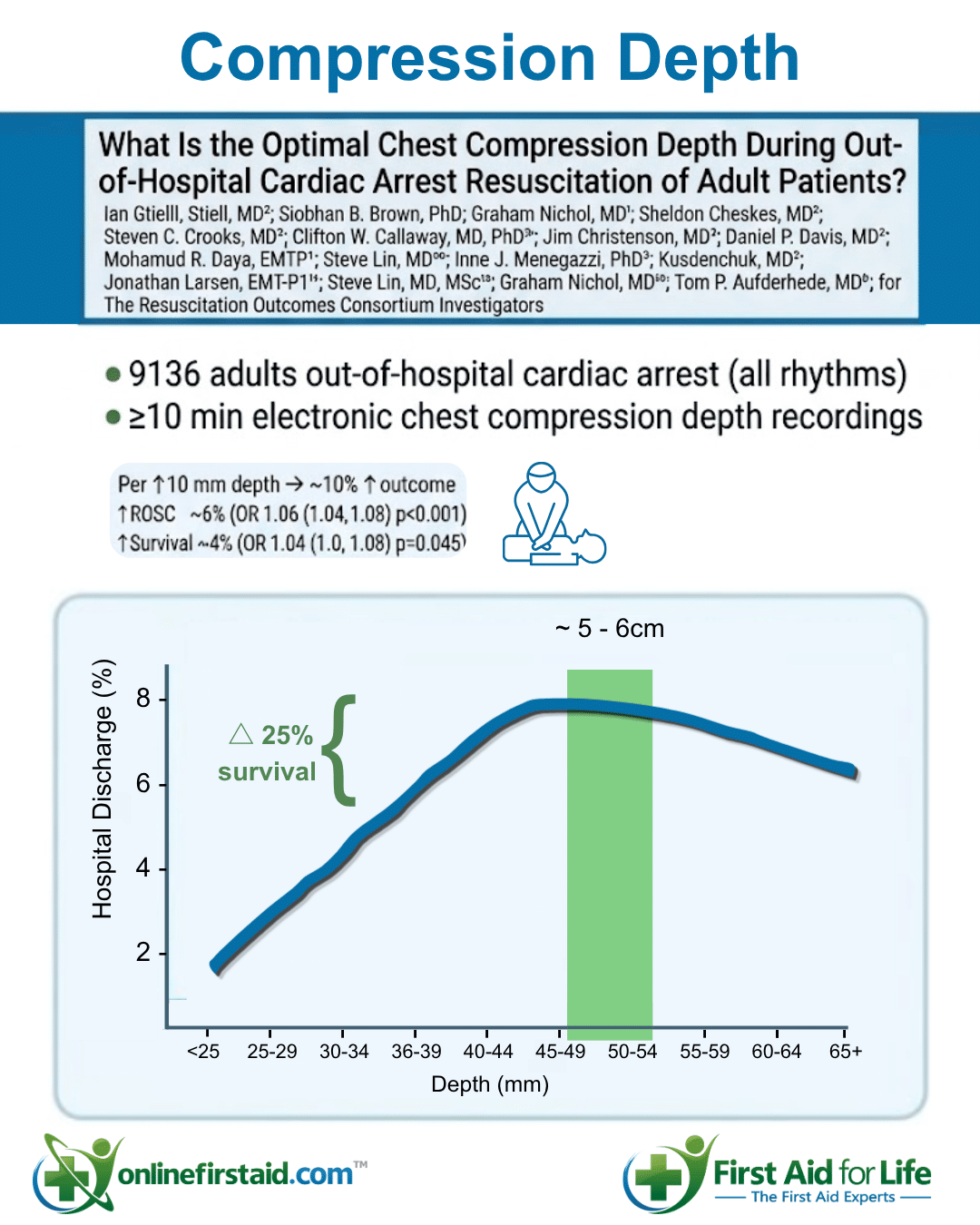
5 to 6 cm deep in adults to ensure the heart is actually being squeezed. It is extremely important not to lean on the chest; it must be allowed time to recoil and fill with blood again. Otherwise, it will not be able to pump oxygenated blood to where it is needed.
Minimal Interruptions
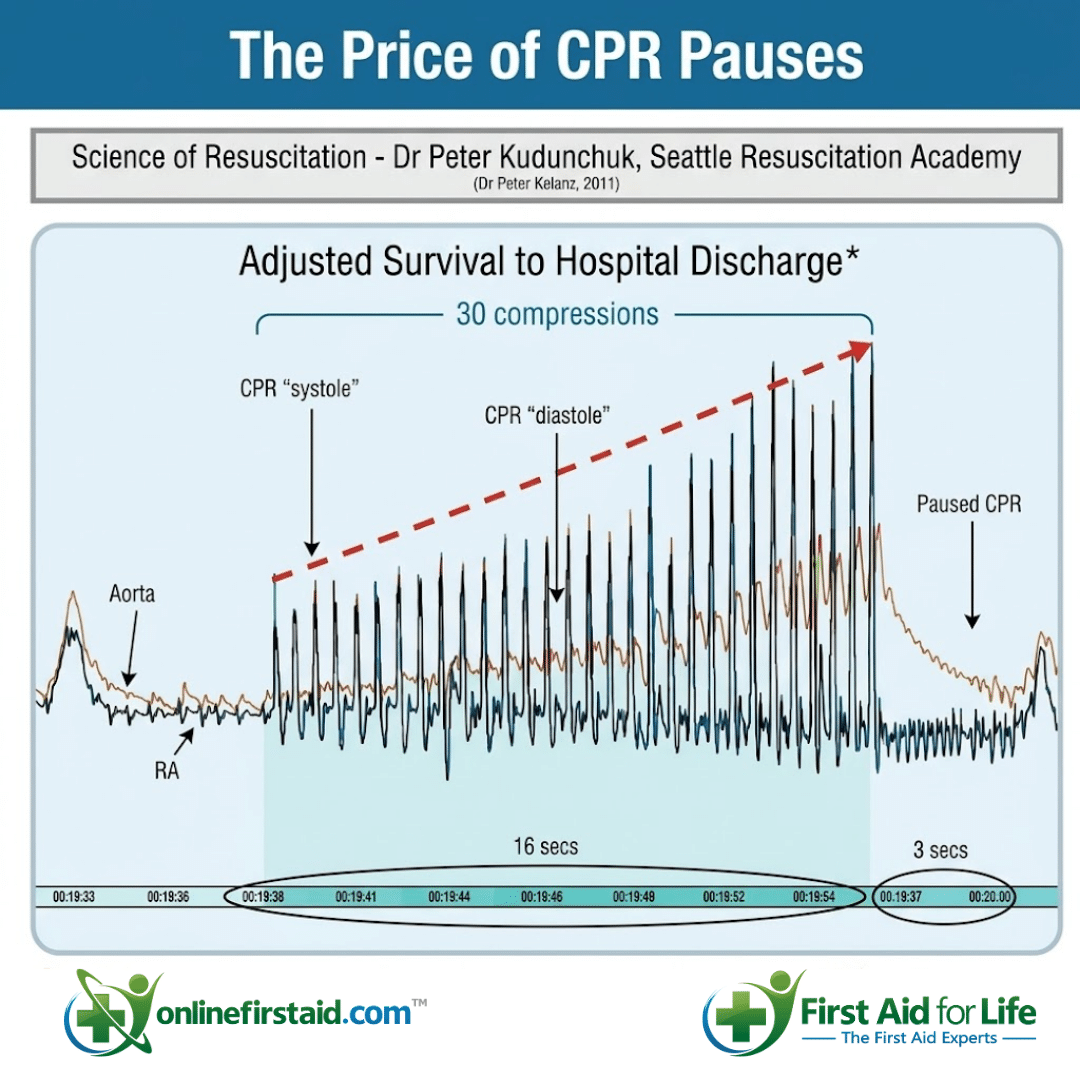
Every second you stop compressing, blood pressure in the system drops almost immediately. It takes about 15 compressions in an adult to create the pressure necessary to circulate the blood to the heart and brain. When you stop compressions, the pressure quickly reduces. Therefore, pauses should be less than 5 seconds in order to give two quick breaths and then return swiftly to chest compressions.
CPR alone rarely restarts the heart; its primary goal is to keep the heart and brain full of oxygenated blood and buy time for someone to bring an AED to help restore a viable rhythm. It is critical to minimise any delay to giving the first AED shock. If an AED is available use it ASAP. A study in Canada with 815 patients showed that if an AED can be used almost immediately they are 52% more likely to survive. For every 5 seconds delay there is between a 13 and 18% reduction in survival rate.
To reduce this delay: Ensure everyone knows where the AED is kept and how to get it immediately.
- If you have a sick or unresponsive casualty get the AED there in advance (before they have gone into cardiac arrest).
- Ask a bystander to do CPR whilst you (or the first aider) put the pads on swiftly
- Check everything is clear and safe whilst the AED is charging
- Press the button immediately (in semi-automatic AEDs)
About us
Written by Emma Hammett for First Aid for Life
It is strongly advised that you attend a Practical First Aid course to understand what to do in a medical emergency. Please visit firstaidforlife.org.uk and onlinefirstaid.com for more information about our practical and online courses and to access free resources.
First Aid for life provides this information for guidance and it is not in any way a substitute for medical advice. First Aid for Life is not responsible or liable for any diagnosis made, or actions taken based on this information.



Thanks and we’ll done for simplifyingthe processes, Emma.