Carbon monoxide is a colourless, odourless and tasteless gas that is poisonous. It is particularly dangerous because as it is breathed in, it enters the bloodstream and binds with haemoglobin to form carboxyhaemoglobin.
The carbon monoxide competes with oxygen and has 6 times greater affinity with the haemoglobin – and so the oxygen doesn’t stand a chance. With the blood depleted of oxygen, the body’s cells begin to suffer and die.
Being exposed to low levels of carbon monoxide can make you feel unwell. Being exposed to high levels of the gas can be fatal.
Carbon monoxide poisoning at home causes in excess of 50 fatalities per year and is responsible for 4,000 medical visits. However, we know there are many people affected by ongoing low-level carbon monoxide levels and this can make people extremely ill.
Common causes of carbon monoxide
Carbon monoxide is produced by incomplete combustion of carbon-containing fuels such as gas, oil, coal and wood. This can occur in many household appliances such as gas fires, boilers, central heating systems, water heaters and cookers.
The most common causes of accidental exposure to carbon monoxide in the home are due to the faulty installation, poor maintenance and inadequately ventilated cookers, heaters and boilers.
Blocked flues and chimneys can also prevent the safe dispersion of carbon monoxide, allowing it to build up to dangerous levels.
Open fires, burning charcoal in shisha pipes indoors and cigarette smoke can produce carbon monoxide. Extra care needs to be taken too for portable appliances in mobile homes, boats and caravans.
Some household products such as paint removers and cleaning fluids contain methylene chloride which causes carbon monoxide poisoning if someone inhales it.
The symptoms of low-level carbon monoxide poisoning include:
tension-type headache
dizziness, nausea, vomiting, tiredness and confusion, stomach pain
shortness of breath and difficulty breathing
symptoms similar to food poisoning and flu. However, unlike flu, you don’t get a high temperature.
symptoms get worse with prolonged exposure
Symptoms of higher-level carbon monoxide poisoning include:
loss of balance, vision and memory and, loss of consciousness.
ataxia – loss of physical co-ordination caused by underlying damage to the brain and nervous system
breathlessness and tachycardia
chest pain caused by angina or a heart attack
seizures
loss of consciousness – with very high levels, death may occur within minutes
High risk groups
Carbon monoxide is a danger to everyone, however some groups are more at risk than others. These include: pregnant women, people with respiratory issues such as asthma or those with chronic heart disease. Babies and children are also very vulnerable due to their small size. Long term exposure to carbon monoxide can also damage an unborn baby.
Pets suffer too. In fact, your pet becoming ill may be the first indication there is a problem; as the smaller the pet or person, the quicker they will be affected. Investigate a possible carbon monoxide leak if your pet dies unexpectedly and suddenly in circumstances not related to age or an existing health issue.
Precautions: There are precautions you can take to make sure you are protected from carbon monoxide poisoning:
get all fuel burning devices checked annually by an expert
chimneys and flues should be swept at least once a year
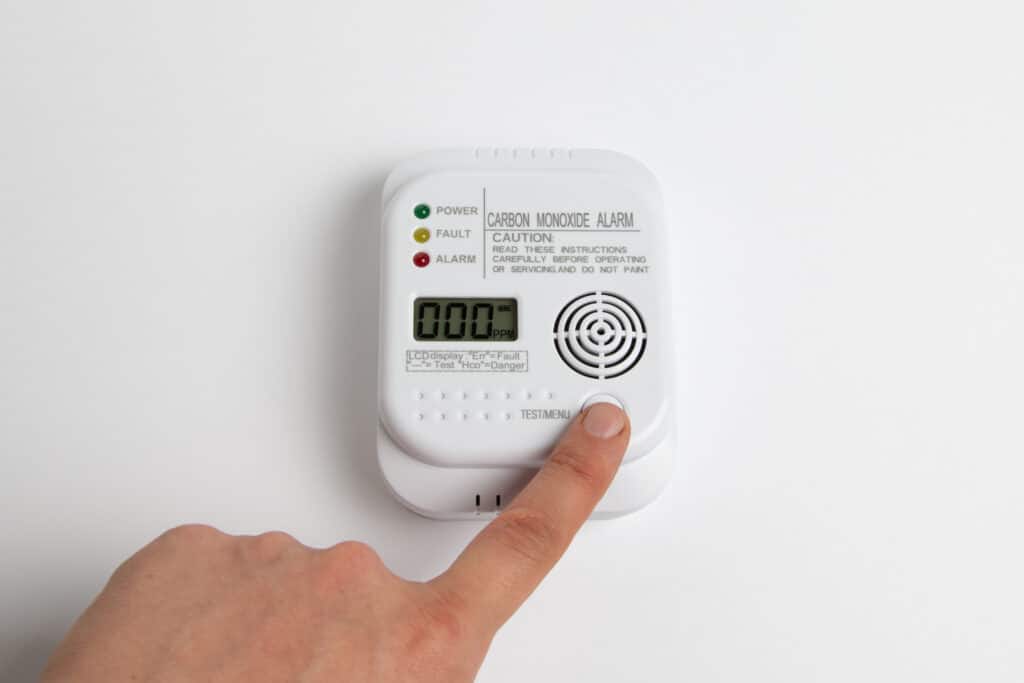
ensure you have carbon monoxide detectors fitted and serviced regularly. These will promptly alert you to a leak. Make sure they are approved to the latest British or European Standard (BS Kitemark or EN50291)
never leave cars or petrol-fuelled lawnmowers, generators or barbeques running in a confined space such as a garage.
check your car exhaust for leaks every year and make sure the exhaust isn’t blocked before starting the engine, for example after heavy snow fall.
Builders should be particularly careful too as many of their tools and equipment potentially generate carbon monoxide and can be very dangerous if operated in confined places.
There are other possible clues to spot which show you have a carbon monoxide leak. Look out for:
sooty or yellow/brown stains on or around boilers, stoves or fires
yellow or orange (instead of blue) flames coming from gas appliances
excessive condensation in the room with the appliance
smoke building up, due to a faulty flue
pilot lights frequently blowing out
black, sooty marks on the front covers of gas fires
What to do if your carbon monoxide alarm sounds or you suspect a leak:
stop using appliances immediately and switch them off.
open doors and windows to ventilate the property.
evacuate the property straight away and don’t return until it has been checked.
call the gas emergency number on 0800 111 999 to report the incident, or the (HSE)Gas Safety Advice Line on 0800 300 363
get immediate medical help – fresh air won’t treat exposure by itself
Signs you might have a carbon monoxide problem might be that others living or working in the vicinity fall ill with similar symptoms; if symptoms disappear when you go away – but return when you come back; or if symptoms are seasonal, e.g. headaches in winter when using central heating.
Treatment
You will be given a blood test for carboxyhaemoglobin in the blood. A level of 30% indicates severe exposure. People who smoke often have higher CO levels naturally
Standard oxygen therapy is given in hospital via a tight-fitting mask. Normal air contains around 21% oxygen. Standard oxygen therapy gives 100% oxygen. This concentrated oxygen allows the body to quickly replace the carboxyhaemoglobin. Therapy continues until carboxyhaemoglobin levels are less than 10%.
Hyperbaric oxygen therapy may be indicated as this floods the body with pure oxygen, quickly replacing the carboxyhaemoglobin in the blood.
Recovery
This varies depending on the extent to which you have been exposed to carbon monoxide and for how long. Around 10-15% of people who have severe carbon monoxide poisoning develop long-term complications
About us
First Aid for Life is a multi-award-winning, fully regulated first aid training provider. Our trainers are highly experienced medical, health and emergency services professionals who will tailor the training to your needs. Courses for groups or individuals at our venue or yours.
First Aid for life provides this information for guidance and it is not in any way a substitute for medical advice. First Aid for Life is not responsible or liable for any diagnosis made, or actions taken based on this information.
Visit www.onlinefirstaid.com for more information about our award-winning online learning
Thanks Emma, learned something new today from your blog and YouTube video. I didn’t know that methylene chloride inhalation can cause Carbon monoxide poisoning. Will use that nugget in my Workplace blog.
We use cookies on our website to give you the most relevant experience by remembering your preferences and repeat visits. By clicking “Accept All”, you consent to the use of ALL the cookies. However, you may visit "Cookie Settings" to provide a controlled consent.
This website uses cookies to improve your experience while you navigate through the website. Out of these, the cookies that are categorized as necessary are stored on your browser as they are essential for the working of basic functionalities of the website. We also use third-party cookies that help us analyze and understand how you use this website. These cookies will be stored in your browser only with your consent. You also have the option to opt-out of these cookies. But opting out of some of these cookies may affect your browsing experience.
Necessary cookies are absolutely essential for the website to function properly. These cookies ensure basic functionalities and security features of the website, anonymously.
Cookie
Duration
Description
cookielawinfo-checkbox-analytics
11 months
This cookie is set by GDPR Cookie Consent plugin. The cookie is used to store the user consent for the cookies in the category "Analytics".
cookielawinfo-checkbox-functional
11 months
The cookie is set by GDPR cookie consent to record the user consent for the cookies in the category "Functional".
cookielawinfo-checkbox-necessary
11 months
This cookie is set by GDPR Cookie Consent plugin. The cookies is used to store the user consent for the cookies in the category "Necessary".
cookielawinfo-checkbox-others
11 months
This cookie is set by GDPR Cookie Consent plugin. The cookie is used to store the user consent for the cookies in the category "Other.
cookielawinfo-checkbox-performance
11 months
This cookie is set by GDPR Cookie Consent plugin. The cookie is used to store the user consent for the cookies in the category "Performance".
viewed_cookie_policy
11 months
The cookie is set by the GDPR Cookie Consent plugin and is used to store whether or not user has consented to the use of cookies. It does not store any personal data.
Functional cookies help to perform certain functionalities like sharing the content of the website on social media platforms, collect feedbacks, and other third-party features.
Performance cookies are used to understand and analyze the key performance indexes of the website which helps in delivering a better user experience for the visitors.
Analytical cookies are used to understand how visitors interact with the website. These cookies help provide information on metrics the number of visitors, bounce rate, traffic source, etc.
Advertisement cookies are used to provide visitors with relevant ads and marketing campaigns. These cookies track visitors across websites and collect information to provide customized ads.




Thanks Emma, learned something new today from your blog and YouTube video. I didn’t know that methylene chloride inhalation can cause Carbon monoxide poisoning. Will use that nugget in my Workplace blog.
Is there a low level of Carbon Monoxide where Men can work without using breathing apparatus
Even low levels of carbon monoxide can make you seriously ill