
Chickenpox Advice
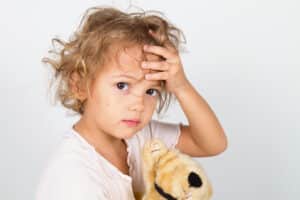
What is Chickenpox?
Chickenpox is usually a mild and common childhood illness that most children catch at some point. It causes a rash of red, itchy spots that turn into fluid-filled blisters. They then crust over to form scabs, which eventually drop off. Some children have only a few spots, but in others they can cover the entire body. The spots are itchy and uncomfortable. For some people – particularly, babies, pregnant women and immunocompromised people; chickenpox can be a very serious condition and occasionally it can be life-threatening.
How do you Catch Chickenpox?
Chickenpox is most infectious from one to two days before the rash starts, until all the blisters have crusted over (usually five to six days after the start of the rash). But it may take from 10 to 21 days after contact with an infected person for someone to develop chickenpox.
The spots start appearing around 1 to 3 weeks after catching chickenpox.
You can catch chickenpox from:
- being in the same room as someone with it
- touching things that have fluid from the blisters on them
- someone who has shingles, if you have not had chickenpox before (but you cannot catch shingles from someone who has chickenpox)
If your child has chickenpox, keep them away from public areas; avoid contact with people who have not had it, especially people who are at risk of serious problems, such as newborn babies, pregnant women and anyone with a weakened immune system.
If you think you need to visit the doctor, tell the receptionist that you think your child has chickenpox.
Treatment
Chickenpox in children, is generally a mild illness, but expect your child to feel pretty miserable and irritable while they have it. 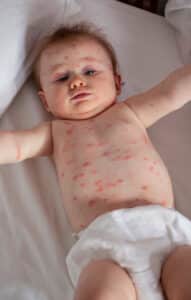 Your child is likely to have a fever at least for the first few days of the illness and the spots are incredibly itchy. There is no specific treatment for chickenpox, but Paracetamol syrup (Calpol) is very helpful to relieve pain and discomfort and can reduce a fever too. Calamine lotion along with aqueous cream can ease itching. Paediatric Antihistamine syrup such as Piriton can help them to sleep.
Encourage them to drink plenty of fluids. Ice lollies can be soothing and helpful to give them more liquid too.
Prepare a soothing oat bath
A soothing tip for very itchy skin, is to put some porridge oats into a sock and hold this under the tap to fill the bath, so that the water is infused with the oats. Don’t run a hot bath as that can make things more itchy, tepid water is ideal. After the bath, pat their skin dry and avoid rubbing their skin.
In most children, the blisters crust up and fall off naturally within one to two weeks. It is a good idea to cut their nails short to prevent them scratching, as scratching can cause scarring. If they are still scratching then wearing cotton mittens or light socks on their hands at night may help to prevent them damaging their skin.
For most children, chickenpox is a mild illness that gets better on its own, but occasionally there can be complications. For some people chickenpox can be very serious indeed and may require hospital admission and can cause fatalities. In rare cases it can cause a swelling of the brain, called encephalitis, inflammation of the lungs, and can lead to strokes, which can result in hospitalisation and, in very rare cases, death.
When to contact your GP
Contact your GP if the blisters on their skin become infected or get urgent medical help if your child has a pain in their chest or has difficulty breathing. Ensure you tell the receptionist that you think your child has chickenpox.
- do not give ibuprofen for pain, unless you’re told to by a doctor, as it may cause serious skin infections
- do not give aspirin to children under 16 years
- try and avoid scratching the spots, as scratching often leads to scarring
New Vaccination Rollout
All young children in the UK will be offered a free chickenpox vaccine by the NHS.
It is hoped that offering the vaccine free will not only protect people from severe, although rare, complications of chickenpox, but also save parents taking time off work to look after a sick child. Introducing the vaccination will reduce the prevalence of chickenpox and protect adults, pregnant women, babies and immunocompromised people, who are more likely to become seriously ill from the illness.
According to the Department of Health and Social Care, chickenpox causes an estimated £24m in lost income and productivity every year in the UK.
The vaccine will be given as two doses, at 12 and 18 months of age, combined with the existing MMR jab which protects against measles, mumps and rubella.
They are planning a campaign for older children to get the vaccine, so that they don’t miss out.
There has been a chickenpox vaccine available for many years. However, until now, parents who wanted to protect their child against the chickenpox varicella virus had to pay for it. This can cost up to £200.
Disclaimer:
First Aid for life provides this information for guidance and it is not in any way a substitute for medical advice. First Aid for Life is not responsible or liable for any diagnosis made, or actions taken based on this information
Parents looking to support their children further should attend a practical First Aid course to understand what to do in a medical emergency.

About Us
Award-winning first aid training tailored to your needs. Please visit our site and learn more about our practical and online courses. It is vital to keep your skills current and refreshed.
It is strongly advised that you attend a fully regulated Practical or Online First Aid course to understand what to do in a medical emergency. Please visit https://firstaidforlife.org.uk or call 020 8675 4036 for more information about our courses.
First Aid for Life is a multi-award-winning, fully regulated first aid training provider. Our trainers are highly experienced medical, health and emergency services professionals who will tailor the training to your needs. Courses for groups or individuals at our venue or yours.
First Aid for life provides this information for guidance and it is not in any way a substitute for medical advice. First Aid for Life is not responsible or liable for any diagnosis made, or actions taken based on this information.

0 Comments