
Falls and the Elderly – Prevention and How to Help Following a Fall
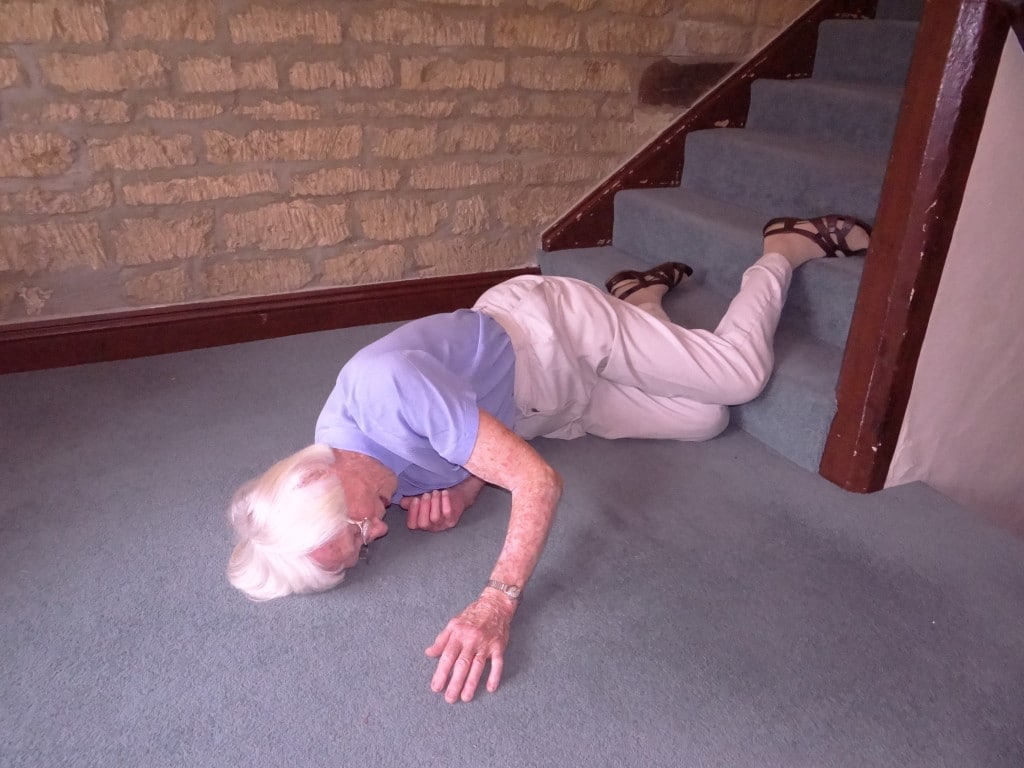
More than 500,000 people aged over 65 years of age attend accident and emergency departments every year as the result of accidents at home – the majority of these being falls.
More than 3,500 people in England and Wales die every year following a fall and nearly a third of a million people need hospital treatment. Many older people who suffer from falls never fully recover from either the physical or psychological impact of their injuries. Sadly, falls are the most common cause of injury related deaths in people over the age of 75.
Although the fall itself often doesn’t cause a serious injury; if the casualty is unable to get up following their fall, they are more likely to suffer hypothermia and pressure sores. Most accidents in the elderly result from falls from stairs or steps with over 60 per cent of deaths resulting from accidents on stairs.
As we get older we are more prone to falling as we forget that we cannot respond as quickly as we used to, if we trip or overbalance. As our eyesight deteriorates, it is also easier to miss a step.
Expericencing a fall can also impact older people’s confidence as well as the physical aspect. As a result, they may feel more unable to be independent or to contunie their normal routine.
Preventing falls:
Examples of home hazards:
- Loose stair carpets and rugs
- poorly fitting footwear and slippers that do not have suffiecient grip
- Low light if combind with failing eyesight
- Items placed on the stairs
Other top tips to prevent accidents:
- Ensure landings, stairs and hallways are well lit with two-way light switches
- Do not leave items on the stairs as it is easy to trip over them
- Replace damaged carpet and avoid repetitive carpet patterns that can affect perception and make it more difficult to see individual stairs.
- Ensure banisters are secure and sturdy, two easy-grip handrails gives more stability
Another piece of important advice is to keep the route to the bathroom clear and well lit. Toilet trips at night when it is dark greatly increase the risk of falling. To prevent this, make sure that light for the hallways or path to bathroom are easily accessible. In addition, keep the floor clear of any potential trip hazards as these will be harder to see in the dark.
General help and advice to prevent injuries and falls:
- As we get older we are more prone to lose our balance through sudden movements, e.g. getting out of bed or a chair too quickly – this is often more apparent if taking medication for high blood pressure. Getting up very slowly and bringing the head up last can reduce the dizzy effects of postural hypotension.
- Floors and surfaces should be as clear as possible as worn rugs, slippery floors and paths, uneven surfaces, trailing flexes, and items left lying around make falling far more likely.
- Pay more attention to footwear – ill-fitting shoes that have lost their grip, or old slippers often precipitate a fall.
- Grab rails and places to sit down in the bathroom and kitchen can be really helpful if suddenly feeling dizzy.
- Floors should be cleaned carefully to ensure that they are not slippery and any spillages immediately and thoroughly removed.
Advice for someone following a fall:
Stay as calm as you can and don’t rush to get up! Give yourself time to establish whether you are hurt.
Lie still and work systematically up your body to check for pain or bleeding when moving your limbs.
To learn about how to help whilst waiting for an ambulance read our article here
With no obvious injury of pain:
- If you feel able to get yourself up, do this slowly. Roll onto your hands and knees and look for a stable piece of furniture, such as a chair or bed. Also, find something soft to kneel on to protect your knees.
- Hold on to the furniture with both hands and use the furniture to assist you in getting up.
- Get up very slowly leaning forward onto your knees, with the cushioning beneath them and holding onto something to help yourself up.
- Take time to recover and phone someone to tell them what happened.
If experiencing pain:
If you are hurt or unable to get up, try to get someone’s attention by calling for help (use your mobile phone if you have one to hand), bang on the wall or floor to alert neighbours, or press your emergency aid call button (if you have one). Alternatively, try and crawl to your telephone and call someone local or dial 999 to call an ambulance.
- Do not exhaust yourself trying to get help.
- Remain calm and if possible cover yourself with something warm, such as a rug or coat. Also, wrap yourself up as well as you can and get as comfortable as possible.
- It is important to shift your body weight frequently to prevent yourself getting pressure sores.
- Check any grazes or cuts with a medical professional. Particularly on shins as it is important that they are appropriately assessed, cleaned and dressed to avoid getting leg ulcers.
Read this article for more information about how to treat head injuries
Written by Emma Hammett for First Aid for Life
About us:
First Aid for Life provide award-winning first aid training tailored to your needs. Please visit our site and learn more about our practical and online courses. It is vital to keep your skills current and refreshed. We are currently providing essential training for individuals and groups across the UK. In addition, we have a great range of online courses. These are ideal as refreshers for regulated qualifications or as Appointed Person qualifications.
You can attend a fully regulated Practical or Online First Aid course to understand what to do in a medical emergency. Please visit https://firstaidforlife.org.uk or call 0208 675 4036 for more information about our courses.
First Aid for Life is a multi-award-winning, fully regulated first aid training provider. Our trainers are highly experienced medical, health and emergency services professionals who will tailor the training to your needs. Courses for groups or individuals at our venue or yours.
First Aid for life provides this information for guidance and it is not in any way a substitute for medical advice. We are not responsible or liable for any diagnosis made, or actions taken on this information.


0 Comments